
Crime Mysteries: Find objects
G5 EntertainmentAdventure
4.52.70K Reviews
- Version
- 1.30.3400
- Installs
- 1.00M
- Age Rating
- Everyone 10+
Screenshots




Our Review of Crime Mysteries: Find objects
 Analysis by Appyee
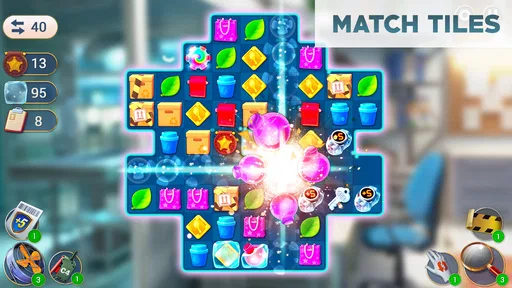
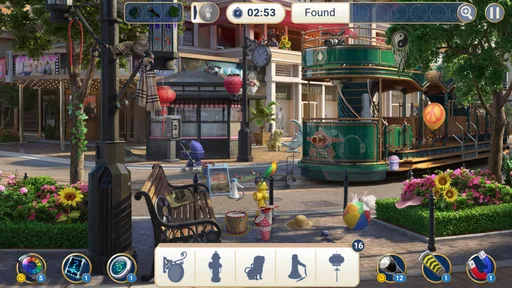
I went into Crime Mysteries: Find objects expecting a simple hidden-object game, but its blend of investigation scenes and match-3 puzzles gives it a more defined personality than the usual search-and-tap formula. Developed by G5 Entertainment, this free adventure game presents each case as a small detective routine: inspect a location, identify useful details, work through a puzzle, and move the investigation forward. My overall view is positive, although it is best enjoyed by players who like a relaxed, repeatable structure rather than a fast or deeply strategic crime thriller.
The central appeal is easy to understand. You are not only looking for objects in a crowded picture; you are also using match-3 challenges as part of the path through a case. That combination creates a useful change of pace. When my attention started to tire during a search scene, the puzzle offered a different kind of focus. When a match-3 board felt repetitive, returning to a location restored the feeling of investigating something.
How the detective-and-puzzle loop feels in practice
I found the game works best when I treat each scene as a quick visual investigation rather than a race to tap every obvious object. A useful approach is to scan the full image first, then search one area at a time; it helps me stay organized when details blend together. That measured rhythm also makes the shift into the match-3 stages feel like a change of focus, which leads to the question of how well the two activities support each other.
Searching scenes is more thoughtful than simply tapping everything
The hidden-object sections work best when I slow down and treat the scene as evidence rather than as a pile of clickable decorations. The task is to recognize shapes, colors, and familiar items while keeping the requested objects in mind. That sounds basic, but the pressure comes from switching between visual details quickly. A useful habit is to scan the image in sections instead of jumping randomly from one object to another. I found that this reduced missed items and made the process feel more like observation than guessing.
That approach matters because a search game can become frustrating when every mistake feels like a lack of luck. Here, patience is a real advantage. I also recommend checking the whole scene before tapping the first obvious object. Doing so helps build a mental map of the location and makes less noticeable items easier to find later. It is a small technique, but it turns a casual activity into a more satisfying detective exercise.
The scenes are especially suitable for short sessions. I could play one part of a case while waiting for an appointment or during a quiet break, then stop without needing to remember a complicated control scheme. The game’s adventure framing gives those short sessions a reason to continue, while the straightforward interaction keeps the barrier to entry low.
Match-3 puzzles provide variety, but they do not replace a full puzzle adventure
The match-3 stages are the other major part of the experience. Matching pieces is familiar, so the game does not need a long tutorial before it becomes playable. The benefit is accessibility: someone who enjoys casual tile puzzles can understand the rhythm immediately, while a player who came for the investigation receives a change of activity without leaving the case.
My reservation is that the match-3 side can feel less distinctive than the detective presentation. It supports the investigation loop, but it is not the reason I would choose this game over a dedicated match-3 title. If your priority is elaborate board strategy, complex goals, or a constantly changing puzzle system, a specialist match-3 game will probably offer more depth. In this game, the boards are most effective as a pacing tool between searches.
The best way to approach them is to avoid treating every move as a race. I look for combinations that clear space and create future options rather than immediately making the first available match. That habit is useful when a board’s objective is less obvious, and it prevents the puzzle from becoming a sequence of automatic taps. Even so, players who want a demanding logic challenge should keep their expectations measured.
The case structure gives ordinary activities a sense of purpose
What keeps the two activities connected is the case framework. Searching a scene feels more rewarding when it contributes to a larger question, and the match-3 section feels less detached when it helps maintain the investigation’s momentum. I enjoyed that sense of progression because it gave a familiar casual-game loop a light narrative reason.
This is not the same as playing a traditional detective adventure with lengthy dialogue, branching choices, and free exploration. The cases are presented through repeatable activities rather than through a fully interactive crime simulation. That distinction is important. I would describe the game as a casual investigation experience with puzzle ingredients, not as a serious mystery game in the style of a story-heavy adventure.
For everyday play, that design is convenient. Imagine having fifteen minutes after dinner: you can open a scene, search carefully, complete a puzzle, and put the phone away. There is enough structure to make the session feel worthwhile, but not so much narrative complexity that stopping midway becomes awkward. I found this particularly appealing when I wanted something more engaging than idle tapping but less demanding than a long console-style adventure.
What the audience figures suggest about its reach
The game is free to install and carries an Everyone 10+ content rating, which places it comfortably in the family-friendly casual space while acknowledging that its crime theme is not aimed at very young children. It has passed the one-million-install mark and holds a 4.5 average from around twenty-six thousand ratings, with roughly 2.7 thousand written reviews. Those figures suggest that the format has found a substantial audience, and my experience explains why: the controls are approachable, the sessions are flexible, and the two puzzle types prevent the opening hours from feeling completely one-note.
Its release on September 9, 2020 also helps explain the overall feel. This is an established mobile game rather than a brand-new experiment, and the current version is 1.30.3400. I appreciate that the format is already settled; I did not have to learn an overly complicated system before reaching the actual searches and puzzles. The trade-off is that players looking for a fresh, radically different take on the genre may find the design familiar.
Where the free-to-play model affects the experience
Although the game is free, in-app purchases range from $0.99 to $99.99 per item. That is the point I would discuss with anyone deciding whether to recommend it. A free entry price makes it easy to test the core loop, but optional purchases can change how comfortable the progression feels over longer play. Players who are happy to move at a patient pace are better positioned to enjoy it without feeling pushed toward spending.
My practical advice is to treat the purchase system as a convenience layer, not as part of the basic promise of the game. Before buying anything, I would first decide whether I enjoy the searches and match-3 boards enough to keep returning. If the answer is yes, setting a personal spending limit is sensible, especially because the listed upper end is much higher than the cost of a typical one-off mobile game.
This model also affects who should skip it. If you want a complete premium experience with no store-related decisions, a paid adventure game may suit you better. You may lose the convenience of a free trial, but you gain a clearer sense of what the full experience costs. Conversely, if you like sampling games and do not mind gradual progress, the free starting point is a genuine advantage.
Small habits that make the game more enjoyable
My first useful tip is to separate observation from action. Instead of tapping as soon as I notice something, I scan for several requested items and then select them in a deliberate order. This makes the scene easier to read and reduces the feeling that I am hunting blindly. It is especially helpful when several objects share similar colors or outlines.
My second tip concerns the match-3 stages: make room before chasing an attractive combination. A flashy match is not always the most useful move. Clearing crowded areas can expose better possibilities and gives the board more flexibility. This is a modest strategy, but it makes the puzzle side feel less passive.
My third tip is to use the game as a rhythm of alternating attention. I would not play a long session by forcing myself through every available activity. I get more from it when I stop after a case segment or switch tasks when visual searching starts to feel tiring. The design supports that kind of rotation, and it helps preserve the pleasant detective mood instead of turning the game into a chore.
A fourth trade-off is worth mentioning: the game’s accessibility comes partly from its familiarity. The same qualities that make it easy to pick up can make it predictable for experienced hidden-object players. If you have already played many games built around scene searches and casual tile puzzles, you may recognize the basic rhythm quickly. The case presentation adds motivation, but it does not completely transform those genres.
Who will enjoy it most, and who should look elsewhere
I would recommend this adventure to players who enjoy visual searches, light mystery themes, and mobile games that can be played in small portions. It is a good fit for someone who wants a gentle detective atmosphere without demanding controls or complicated rules. It also works for players who like alternating between two familiar puzzle styles instead of committing to one activity for an entire session.
It is less suitable for someone seeking intense suspense, realistic investigation work, or a rich branching story. The game’s detective identity is expressed through finding clues and completing puzzles, not through interviewing suspects or building a detailed evidence board. Likewise, competitive puzzle fans may find the match-3 sections too conventional, while players who dislike free-to-play progression may prefer a paid alternative from the beginning.
Device compatibility is fairly broad: the game requires Android 5.0 or later. That makes it accessible to people who are not using a recent phone, although the exact feel can still depend on screen size and hardware. A larger display is helpful for crowded search scenes because small details are easier to distinguish. On a compact screen, I would expect to spend more time zooming in mentally, even though the basic concept remains easy to understand.
My final assessment after weighing the strengths and friction
Crime Mysteries: Find objects succeeds because it knows what kind of game it wants to be. It is not trying to deliver a complex detective simulation. Instead, it wraps hidden-object searches and match-3 puzzles in a case-based adventure format that is easy to open, easy to understand, and comfortable to play in short bursts. The strongest evidence in its favor is the balance between activities: neither side has to carry the entire experience alone.
The meaningful weakness is also clear. The investigation theme can make the game feel more distinctive than the underlying mechanics really are, and the free-to-play structure deserves careful handling during extended play. Players who want deep narrative choices or demanding puzzle design should choose a different kind of game. That is not a flaw for everyone, but it is an important boundary.
For me, the right recommendation is conditional but confident: try it if you want a casual crime-themed game that rewards patience and gives you a reason to return for another short session. Keep your spending expectations in check, use deliberate search and board habits, and treat the detective story as a light framework rather than a full mystery novel. With those expectations, G5 Entertainment’s game is an enjoyable pick for relaxed mobile puzzling and a worthwhile option for anyone who likes their casual games with a little investigative flavor.
Verdict
Strengths of Crime Mysteries: Find objects
- Engaging hidden-object scenes with varied crime-themed settings.
- Clues and evidence create a satisfying investigative atmosphere.
- Simple controls make it accessible for casual players.
- Short cases fit well into quick gaming sessions.
- Regular puzzles provide a good mix of observation and deduction.
Limitations of Crime Mysteries: Find objects
- Some scenes can feel repetitive after extended play.
- Hints or extra energy may be limited during longer sessions.
- Small objects can be difficult to spot on phone screens.
- Progress may slow without optional purchases or waiting.
- The storyline is lighter than a full-featured detective adventure.
Other Releases by G5 Entertainment
View All
Hidden City: Hidden Object
Adventure4.6

Homicide Squad: New York Cases
Adventure4.5

The Secret Society: Mystery
Adventure4.5

Sherlock・Hidden Object Mystery
Adventure4.6
Similar Picks in This Category
View All
Roblox
Roblox Corporation4.2

Pokémon GO
Niantic, Inc.3.5

Ninja warrior: legend of adven
TOH Games4.6

Ninja Arashi
Black Panther4.6

Eyes - The Horror Game
Fearless Games sp. j.4.5

Critical Action:Gun Strike Ops
FPS Shooter & Action Game4.3
Frequently Asked Questions
What is Crime Mysteries: Find objects and how is the gameplay structured?
Crime Mysteries: Find objects is a hidden-object puzzle game built around crime investigations, story chapters, and clue discovery. You examine detailed scenes, search for specific items, solve related puzzles, and follow the evidence to uncover what happened. The game combines casual point-and-tap exploration with a mystery narrative, so it is suitable for players who enjoy detective themes without complicated controls.
Is Crime Mysteries: Find objects free to download and play?
The game can generally be downloaded for free, but free access may include optional in-app purchases. These purchases can provide additional hints, energy, coins, or other helpful resources, depending on the current version. You can normally progress without paying if you are willing to replay scenes or wait for resources to refill. Check the store listing before downloading for the latest pricing and purchase details.
Does the game require an internet connection?
An internet connection may be needed for the initial download, advertisements, in-app purchases, cloud features, updates, or newly released content. Some previously loaded investigation scenes may remain playable offline, but this can vary by device and version. If you plan to play while traveling, open the game online first and test which chapters and features remain available without Wi-Fi or mobile data.
Is Crime Mysteries: Find objects appropriate for children?
The game is presented in a stylized, puzzle-focused format rather than as a realistic crime simulator, but its stories may still involve investigations, suspicious characters, disappearances, or references to criminal activity. Parents should review the age rating and store description before allowing younger children to play. The difficulty, reading requirements, advertisements, and optional purchases are also worth considering.
What should I know about hints, energy, and in-game progress?
Searching scenes can become more challenging as the story advances, and the game may offer hints or consumable resources to help locate difficult objects. Depending on the version, energy or similar limits can restrict how quickly you start new investigations. Careful observation and replaying scenes can reduce the need for paid assistance. Before switching devices, check whether progress is linked to an account or backed up.
Play our best games!


